
Learn More
Nov 10, 2026 ·
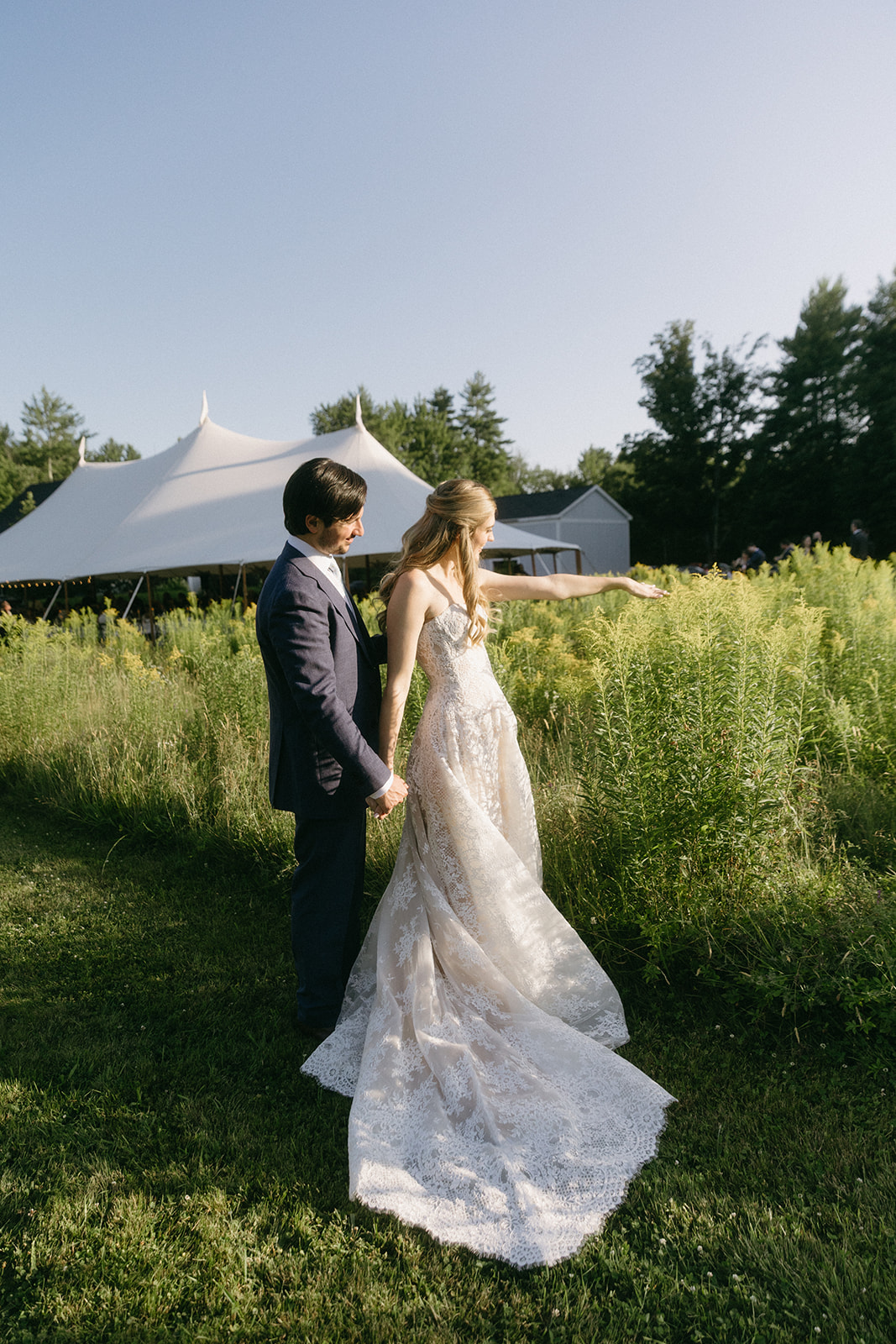
A tented wedding in Maine begins with an idea and ends with a venue that exists for one weekend, built entirely around the people you love. The band goes where the dancing will be best. The tables are as long as your guest list needs them to be. The view, the lawn, and the light at dinner are all yours.
It is also the most involved kind of wedding to produce. Everything a venue normally provides has to be designed, sourced, and brought to the property: power, water, restrooms, a kitchen, a floor, and a plan for the weather.
This guide covers what that takes. You will find what a tented wedding in Maine costs, what your property needs, how to plan for coastal weather, and when to begin.
What does a tented wedding in Maine cost?
A tented wedding costs more than the same wedding in an established venue, because you are building the venue. Couples are often surprised by this, so it is worth knowing early.
For 150 guests, the tent and its infrastructure typically begin around $30K before full flooring, catering, flowers, music, media, design rentals, etc. The full wedding weekends we plan on private property generally begin at $1,000/person.
Seven things shape that number:
- The tent itself. A sailcloth tent with wooden poles, a clear-top structure, and a frame tent are priced very differently. Size matters as much as style.
- The ground. A tent needs level ground, and private property is rarely level on its own. If yours slopes or dips, some landscaping prep work will likely be needed before the tent arrives, and that becomes part of the budget.
- The floor. A full floor keeps the ground level and dry in any weather. It is also one of the larger line items.
- Power. A house cannot run a band, a catering kitchen, and lighting for 150 guests. Generators and distribution are planned by a professional.
- Restrooms and water. Restroom trailers protect a home’s septic system and keep guests comfortable. Water has to be run to the trailers and to the catering kitchen.
- The kitchen. Your caterer needs a full working kitchen in a tent of its own. Your planner plans it, and the rental company builds it.
- Time. A tent takes days to install and days to remove. Labor, delivery, and travel to coastal or island properties all add up.
A clear budget at the start is what lets the design be generous where it matters most to you.
What does a property need to host a tented wedding?
A beautiful view is the beginning. The property also has to work as a venue for a few days, and a site visit with your planner and tent company answers most of these questions in an afternoon.
- Level, open ground. A dinner for 150 with a dance floor, band, and bars often calls for a tent about 40 feet wide and 80 to 100 feet long. It also needs clear space around it for stakes.
- Knowledge of what is underground. Septic fields, irrigation, and utility lines all determine where a tent can be staked.
- Access for trucks. Narrow drives, low branches, soft ground, and ferry schedules shape the delivery plan on many New England properties.
- Power and water. Generators need a place where guests will not hear them. Water has to reach both the catering kitchen and the restrooms, so the nearest source and its distance from each are checked on the site visit.
- Restrooms. The restroom trailers and the catering tent usually sit away from the main tent. Each needs its own level site, power, water, and a lit path.
- Parking or shuttles. Many coastal properties are best served by shuttles from where guests are staying.
- Permits and neighbors. Maine’s State Fire Marshal sets safety rules for tents used for gatherings, and many towns add their own permit, inspection, or noise ordinance. Check with the town office early.
Nearly every property can be made to work. What changes is how much has to be brought in, and that is far easier to learn at the start than in the final month.
How do you plan for Maine weather?
You plan for all of it from the first day, so that the weather becomes part of the weekend and never a worry during it.
Wind. Wind is the biggest weather factor at a coastal wedding, and it shapes more decisions than rain does. The tent’s style, its anchoring, and its position on the property are chosen with the prevailing wind in mind. Sidewalls are on site and ready, whether or not they are ever lowered.
Wind reaches the smallest details too. Paper is used outdoors only when it is weighted down, so escort cards, menus, and ceremony programs are designed with that in mind from the start. The same thinking applies to candles, linens, and anything else light enough to move.
Rain. A full floor, covered walkways, and a ceremony location under cover mean that rain changes very little. The best rain plan is one you would be glad to use.
Fog. Fog arrives on the Maine coast without notice, and it is beautiful. Lighting designed for the tent carries the evening when the view comes and goes.
Cool evenings. Maine nights turn cool even in July, and a September evening can be cold after dark. Heat is planned into the tent, and guests are told what to bring.
Your guests have traveled a long way to be with you. A plan for every forecast is how they stay comfortable, and how you stay with them instead of watching the sky.
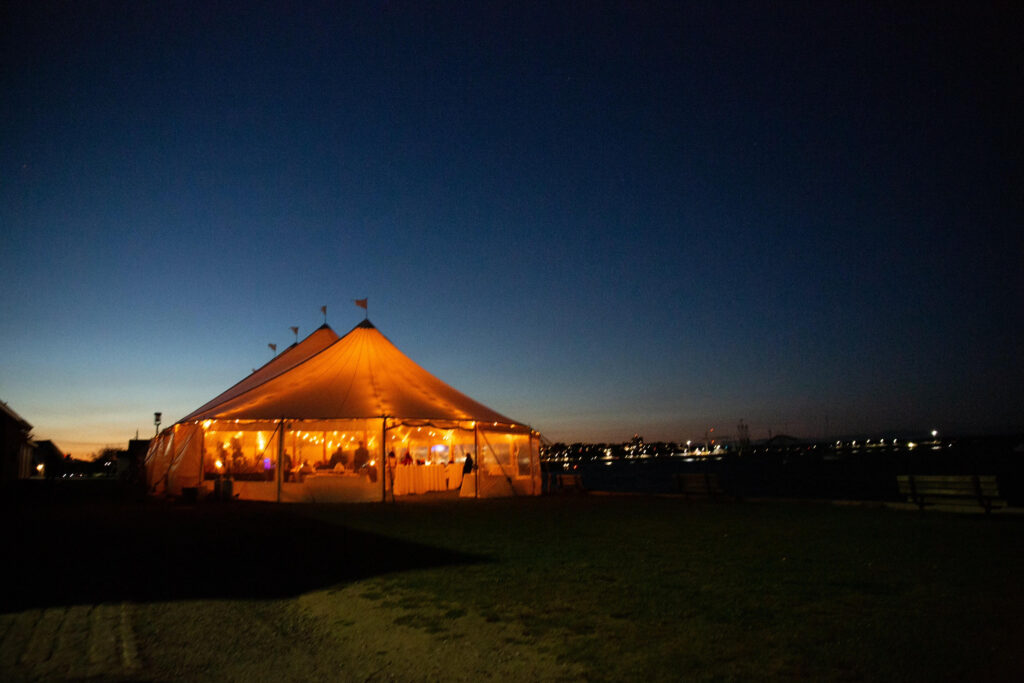
Family property or a rented estate: what changes?
Both give you a private place that belongs to your people for the weekend. The planning differs in a few important ways.
On family property, the meaning is already there. Your guests are standing where you learned to swim, or where your grandparents spent every August. The work is in protecting the home while it hosts:
- The lawn, gardens, and septic system are protected during the build and restored afterward.
- The house stays a home. Family has a private place to dress, rest, and be together.
- Insurance, town permits, and a word with the neighbors are handled well ahead.
- Parents are guests at the wedding. Nobody in the family is directing trucks.
On a rented estate, some of the infrastructure may already exist. The questions are about the terms:
- Where tents may be placed, and how large.
- When the property is yours, including the days needed to build and remove the tent.
- What time music ends.
- What is on site already: power, restrooms, lodging, a kitchen.
Either way, the property is chosen before the tent is. The land decides what is possible, and the design follows from it.
How far ahead should you start, and how does the build come together?
Ideally, you should start planning your private estate wedding at least 12 months from your wedding date, but we have worked to bring together a private estate celebration in 6 months. Maine’s season is short, and the tents, floors, and restroom trailers suited to this kind of wedding are reserved early for summer and early fall weekends.
The first step is a site visit, before any design decisions are made. From there, a scaled plan of the property places every element, from the tent to the last pathway light.
No two production schedules are alike. The property, the tent, the season, and the design each shape how the build unfolds, so every wedding receives a schedule written for it alone.
Some properties need several days of installation before the first table arrives. Others involve a ferry crossing, a narrow lane, or a family already in residence. The schedule is written around what your property and your wedding need.
What stays constant is the care behind it. Every delivery, installation, and removal is planned in detail and overseen in person, and the property is restored when the weekend ends.
What does a wedding planner do on a tented wedding?
On a tented wedding, your planner is the producer and the designer of a venue that does not exist yet. One team holds the entire plan, so that you and your family hold none of it.
Planning. That means the site visits, the scaled drawings, and the power plan. It means permits, the delivery schedule for a dozen or more companies, and the decision about sidewalls at four o’clock on Saturday. Each of these depends on the others, and one person needs to see all of them at once.
Design. A tent is an empty room with a view. The ceiling, the lighting, the floor, and the shape of the tables are all choices. Made with intention, they turn a structure on a lawn into a place that could only be yours. They also decide how the evening feels: where people gather, how easily grandparents and college friends fall into conversation, and how long everyone stays.
As a Maine wedding planner working across New England, this is the work we love most. When it is done well, there is nothing left for you to manage. You are simply present with the people around you. Learn more about our services here.
Planning a tented wedding in Maine or New England?
Having everyone you love on one lawn for one weekend is rare, and it deserves a setting made for it.
If you are considering a tented wedding on a family property or a private estate, we would love to hear about the place and the people you are gathering. Tell us about your wedding
Photographers: Eden Photo and Film, Ramble Free, Emily Delamater, Kivalo


